
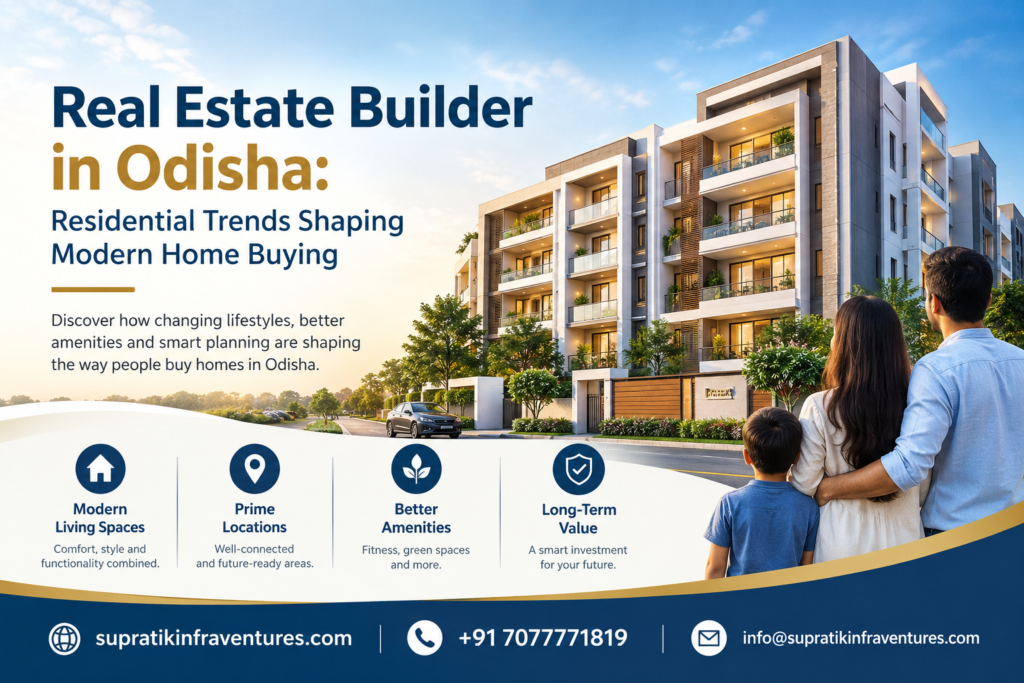
Odisha’s real estate market is changing as cities expand, infrastructure improves, and homebuyers become more careful about their property choices. Residential buyers are looking beyond the size and appearance of a home. Location, connectivity, construction quality, layout, amenities, security, parking, and long-term usability are becoming important parts of the buying decision.
Bhubaneswar continues to be an important residential market in the state, supported by employment opportunities, educational institutions, healthcare facilities, commercial development, and improving connectivity. Other parts of Odisha are also seeing residential activity as people consider housing options outside the most established areas.
For buyers researching a Real Estate Builder in Odisha, understanding the project and the developer is an important part of the property-buying process. A home is a long-term financial commitment, so buyers should look at practical details instead of relying only on promotional material.
The residential sector is also seeing interest in planned communities, efficient floor plans, open areas, better infrastructure, and homes designed around everyday requirements. These trends are influencing how developers plan projects and how buyers compare their options.
Residential Trends Influencing Property Buyers
Modern homebuyers have access to more property information than before. Online listings, project websites, property portals, virtual tours, and social media allow people to research several developments before visiting a site.
At the same time, having more information does not necessarily make the buying process easier. Buyers still need to compare important details and understand the difference between marketing claims and project information.
Several factors are receiving attention in residential property decisions:
- Location and neighbourhood development.
- Connectivity to major roads and transportation.
- Distance from schools and healthcare facilities.
- Availability of parking spaces.
- Floor plans and usable living areas.
- Natural lighting and ventilation.
- Water and electricity infrastructure.
- Security and common-area management.
- Construction specifications.
- Maintenance requirements.
- Project documentation and approvals.
Location remains particularly important because it can affect both everyday convenience and future property demand. A home close to essential services may reduce daily travel time, while a developing area may offer different opportunities and considerations.
Buyers should also consider the surrounding neighbourhood rather than examining only the property itself. Roads, drainage, nearby construction, public facilities, commercial activity, and access to essential services can all influence the living experience.
Choosing a Developer With a Practical Approach
Selecting a residential project requires more than comparing prices. Buyers should also research the developer’s experience, previous developments, project locations, construction standards, and approach to residential planning.
Supratik Infraventures is associated with residential developments in Odisha, including projects in Bhubaneswar and Balasore. Buyers researching a developer can examine available project information and compare factors such as location, project scale, unit configurations, facilities, and overall planning.
A site visit can provide useful information that may not be clear from a brochure or website. Buyers can observe the surrounding area, road access, construction progress, nearby development, and general neighbourhood conditions.
Before moving forward, it is useful to prepare a checklist:
- Confirm the property’s total cost.
- Review the payment schedule.
- Check the carpet and built-up areas.
- Understand parking arrangements.
- Review construction specifications.
- Ask about maintenance charges.
- Check possession-related information.
- Review available project documentation.
- Understand additional charges.
- Compare similar properties in the area.
Buyers should also avoid making decisions based only on the lowest quoted price. A property with a different location, layout, specification, or set of facilities may have a different overall value.
The right property depends on the buyer’s budget, family requirements, work location, lifestyle, and long-term plans. A practical comparison is usually more useful than simply choosing the largest home within a budget.
Sustainable and Community-Based Residential Planning
Sustainability is becoming part of residential development, particularly as buyers and developers consider energy use, water management, ventilation, landscaping, and maintenance.
Sustainable housing does not always require complex technology. Basic design decisions can make a difference to how a property performs during everyday use.
Some features buyers may consider include:
- Natural ventilation.
- Effective use of daylight.
- Energy-efficient lighting.
- Rainwater management systems.
- Landscaped areas.
- Waste-management facilities.
- Water-saving fixtures.
- Durable construction materials.
- Pedestrian-friendly common areas.
- Efficient use of common spaces.
Natural light and ventilation can improve indoor comfort and may reduce dependence on artificial lighting and cooling during suitable conditions. Proper landscaping can also contribute to the appearance and usability of shared residential areas.
Community planning is another important part of modern housing. Roads, entrances, parking, security, open spaces, and common facilities are shared by residents, so their planning can influence everyday convenience.
Different households also have different priorities. Families may look for nearby schools and healthcare facilities, while working professionals may focus more on commuting time and connectivity. Older residents may value accessibility and nearby essential services.
This means residential development needs to consider more than individual housing units. A well-planned community should account for how residents move through, use, and maintain shared spaces.
Making a More Informed Property Decision
Buying a home can involve a substantial financial commitment, so taking time to compare available options can reduce the possibility of overlooking important details.
Online research is a useful starting point, but it should be combined with direct discussions and site visits. Buyers can create a shortlist based on location and budget and then compare individual projects using the same criteria.
A useful comparison can include:
- Location and accessibility.
- Property price and additional costs.
- Size and floor-plan efficiency.
- Construction quality and specifications.
- Available amenities.
- Parking facilities.
- Water and power arrangements.
- Security provisions.
- Maintenance requirements.
- Surrounding infrastructure.
- Project documentation.
- Developer’s previous projects.
It is also important to understand the difference between carpet area, built-up area, and other measurements mentioned in property documents. Buyers should ask for clarification whenever a term or charge is unclear.
Financial planning should be considered before booking. Apart from the property price, buyers may need to account for registration, taxes, maintenance, parking, interior work, loan-related costs, and other applicable expenses.
Documentation should receive careful attention as well. Buyers can seek professional or legal advice where appropriate, particularly when reviewing agreements and project-related documents.
A property decision does not need to be rushed. Taking time to compare projects, visit locations, ask questions, and review documents can provide a clearer picture of the purchase.
Conclusion
Odisha’s residential real estate sector continues to develop as cities grow and buyer expectations change. Homebuyers are increasingly considering location, connectivity, practical layouts, construction standards, amenities, sustainability, and community planning when evaluating residential properties.
For developers, these changing expectations create a need for projects that focus on everyday usability rather than appearance alone. For buyers, the changes provide more factors to consider before making a long-term investment.
A sensible property search starts with understanding personal requirements and setting a realistic budget. Buyers can then compare locations, project features, construction specifications, documentation, maintenance needs, and overall costs.
There is no single property that will suit every household. The right choice depends on individual circumstances, financial planning, lifestyle, and future requirements. Careful research and direct verification can help buyers make decisions based on practical information rather than assumptions.
FAQs
1. What should buyers consider when selecting a Real Estate Builder in Odisha?
Buyers can review the developer’s project experience, locations, construction specifications, documentation, amenities, and previous developments before making a decision.
2. How can buyers compare residential projects in Odisha?
Compare location, total cost, floor plans, construction specifications, parking, amenities, connectivity, maintenance requirements, and available project documents.
3. Is location important when purchasing a residential property?
Yes. Access to roads, schools, hospitals, workplaces, markets, and public services can influence daily convenience and the long-term usefulness of a property.
4. How can I get more information about a residential project?
Visit the project website and use the Contact Us section to request information about available properties, project details, site visits, and other relevant requirements.
5. What information should a property Faq section provide?
A useful Faq section can cover project location, unit types, amenities, pricing information, documentation, parking, payment details, and site-visit procedures.
6. Should buyers visit a property before booking?
A site visit can help buyers understand the surrounding area, accessibility, construction status, neighbourhood development, and practical features that may not be clear online.